Padel tactics: how to read opponents and plan the rematch
In this article
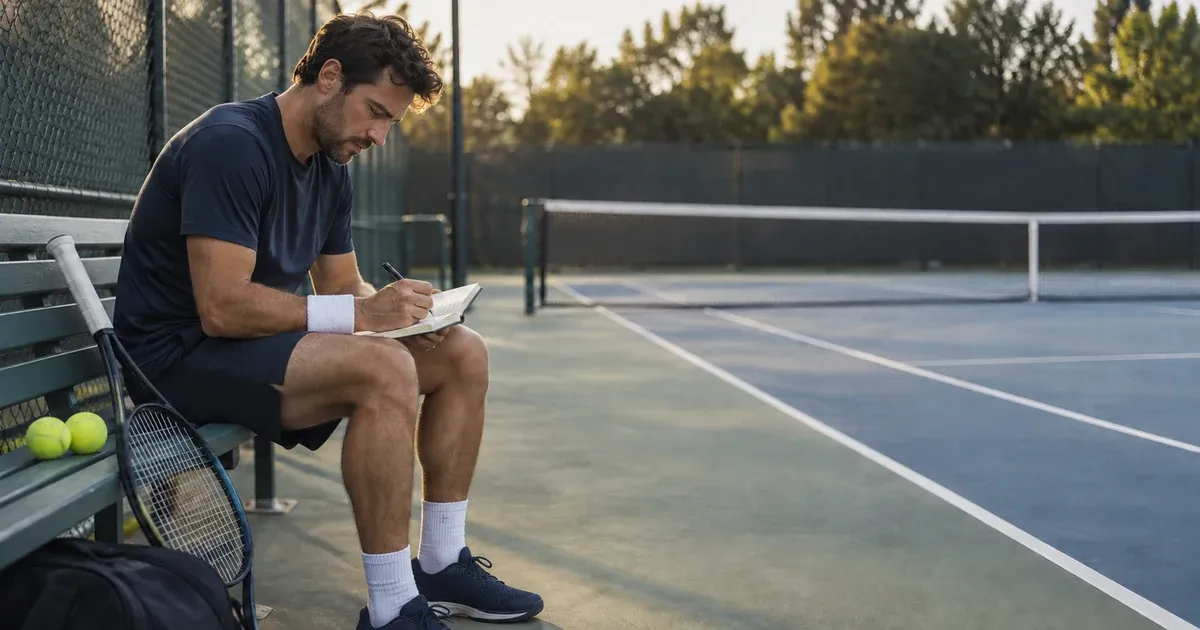
After a padel match, write down one rally that you and your partner want to understand. Record the shot, the reply and where each of you moved. Was your lob short, did an opponent attack a deeper ball, or did you leave a gap by moving forward too early?
Keep those observations in an opponent journal so you can check them against later matches. Include what each opponent did as well as your own shots and movement. Before you meet the same pair again, read the notes with your partner and agree on two things to try.
What should you watch before choosing a tactic?
Start with the pair, then distinguish the two players. Note their names, usual sides and handedness if you know it. Define left and right from their viewpoint, facing the net. A right-side player may cover different space with a new partner or after changing sides; a note about one partnership is not a permanent verdict on either person.
Watch the serve, return and next reply. How quickly does the server move forward, and where is their partner? Does your return give them a comfortable first volley, or leave them hitting low? When you serve, which return gives you or your partner trouble? Keep the opening exchange separate from what happened several shots later.
Next, watch what happens after a lob. A deep lob may push both opponents back, while a short one may give them an easy attacking shot. Move forward together when the ball and the reply allow it; stay ready to defend a strong overhead. Record the lob’s direction and depth, how the opponent replied and where both pairs ended up. “We lobbed and lost” misses the sequence that might explain the point.
The Lawn Tennis Association’s padel coaching guidance discusses net control, lobs, playing through the middle, using the glass and communication. Those are useful things to watch, but the guidance is not an experiment. A controlled ball through the middle can be an option to test when opponents are spread wide; it is not an instruction to aim there regardless of their position. Agree who covers the likely reply, and who takes a ball between you.
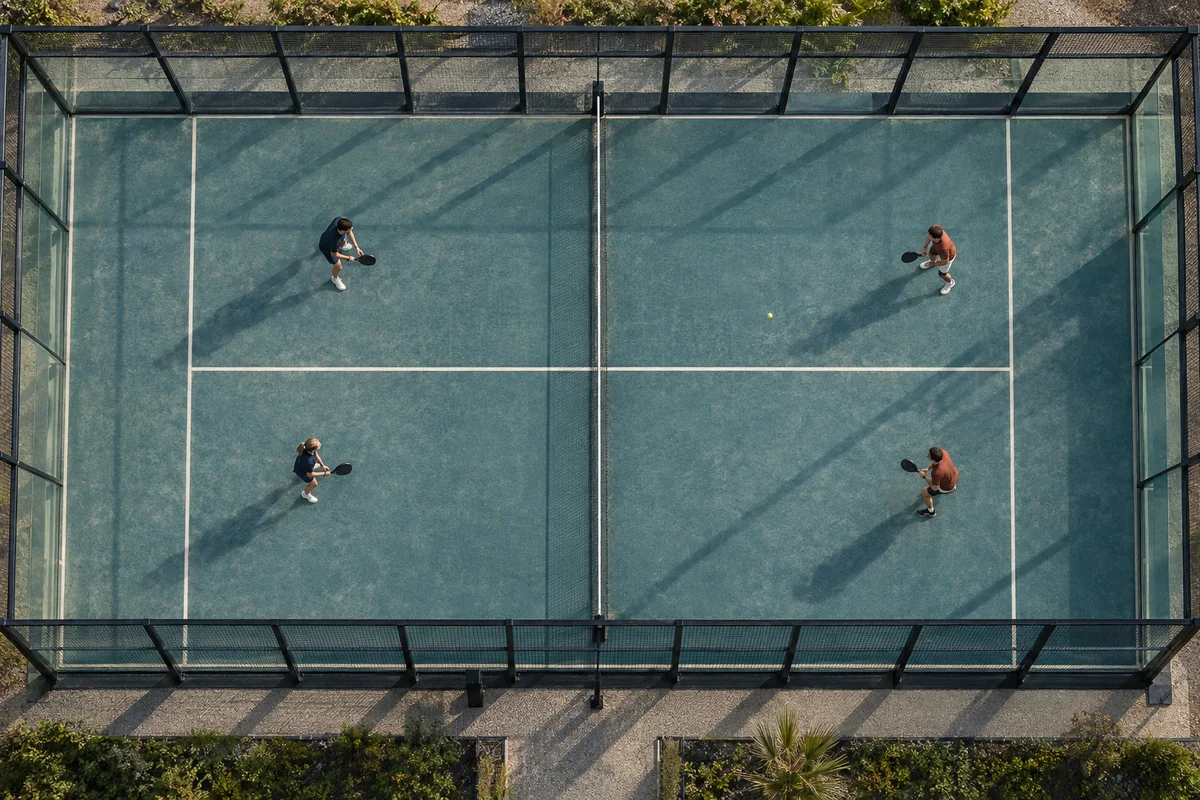
What does the research tell us about the net and the lob?
In Perceptual and Motor Skills (2023), Adrián Escudero-Tena of the University of Extremadura and colleagues at Extremadura, the Polytechnic University of Madrid and the University of Murcia analysed 2,756 rallies from men’s and women’s matches on the 2021 World Padel Tour. Finishing the rally in the net zone was associated with winning it. This was observational research in professional padel, not a test of what happens when club players are told to rush forward. For our notes, the useful question is how a pair gained or lost the net and what followed.
An earlier study by Escudero-Tena and colleagues in the University of Extremadura’s GOERD group, published in the International Journal of Environmental Research and Public Health (2020), examined selected defensive actions across 14 women’s WPT tournament finals in the 2018 season. It studied actions that sent the ball past the attacking pair’s position. Lobs were associated with gaining the offensive position while play often continued. Gaining the net and winning the point are different outcomes. The selected actions do not represent every attempted lob, and these elite women’s matches cannot establish a universal tactic for club players.
For your notes, follow the shot, which pair moved up or back, and how the rally ended. These studies do not tell you how likely your next lob is to work.
Which notes will be useful at the next meeting?
Use these five prompts to organise your notes. This is our own template, and it has not been scientifically validated. Neither study tested whether keeping notes improves padel results.
- Context and pair. Date, partner, opponents, their usual sides and any relevant conditions. Mark whether the detail comes from memory, video or someone who watched.
- Opening. Serve, return, next reply and which pair first took the net.
- Who moved up or back. The shot’s direction and depth, the opponent’s reply, how both pairs moved and how the rally ended. Mark where the ball landed only if it bounced. If it rebounded off the glass, describe what happened next.
- Our shots and movement. Short balls, rushed decisions, gaps between partners or unclear calls. Add an example that contradicts your first impression of the opponents.
- Next test. Two adjustments to discuss with your partner, with a reason to revise or abandon each one.
Two tests are a manageable limit for this template, not a number established by research. Leave blanks when you do not remember. A court sketch can help locate an exchange, provided you label the shot and context and keep one viewpoint throughout.
How could a completed entry change your plan?
This is an invented teaching example, not a player’s record or research data:
Context and pair: Friendly club doubles with Alex, my usual partner, against Ben and Sam. Ben played on his usual right side, facing the net. Didn’t note whether they were right- or left-handed. Written from memory; I didn’t count how often each situation happened.
Opening: When Ben served, Sam was already near the net. Some of our low returns left Ben hitting his first volley upwards as he came forward. When I left the return high, he had an easier volley. Don’t remember all the serve directions.
Who moved up or back: Some deeper lobs towards Ben made both opponents retreat, and Alex and I could move up. They attacked the short lobs and kept us defending. Ben also hit a good overhead off a deeper lob. Can’t assume a deep lob will always push him back.
Our shots and movement: I sometimes moved forward before judging how deep my lob would go. Alex stayed back and a gap opened between us. We also left a ball between us because neither called it.
Next tests: When balanced, try a deep lob and advance together only if their reply permits. If the lob is short or the overhead remains dangerous, defend and reset. When the opponents are spread wide, try a controlled ball through the middle and agree who covers the reply; change that plan if one opponent covers the centre well or our ball offers an easy attack.
The useful detail is the contrast between deep and short lobs, together with your own movement. A few remembered exchanges cannot tell you how often a tactic will succeed. Check a recording if one exists, and keep the counterexample rather than editing it out of the story.
How do you use the notes with your partner?
Before the rematch, read the two tests together and turn each into a short cue you both understand. During the early games, check whether the old pattern still applies. The opponents may have changed partners or sides; the conditions, their replies and your own execution may differ too.
Afterwards, add what worked, what failed and what remains uncertain. Write while you can still reconstruct the exchanges, without inventing a precise count. Our article on match memory explains why recall deserves care; it does not set a fixed deadline for remembering a padel rally.
Compare your notes from matches against different opponents. If the same gap keeps opening after your lob, ask your coach to watch how you and your partner move towards the net. The research on reflection and sporting performance gives context for reviewing experience, with limits on claims that writing itself causes improvement.
In OpponentBook’s free journal, you can place pins on a padel court diagram and add notes about the play at each location. Synced records are saved in the storage you connect; OpponentBook’s account database does not hold a copy of your journal. When you request AI processing, the necessary content passes through an OpponentBook server to the AI provider. Optional end-to-end encryption protects encrypted records from the storage provider, while photos, videos and provider-visible file metadata remain outside that protection. The privacy guide explains these distinctions.
Think back to your last doubles match. Write down a rally in which one pair moved back and the other moved towards the net. Include what you and your partner did, then choose two things to discuss before you meet those opponents again.